What Two Days can Actually Change
May 2026
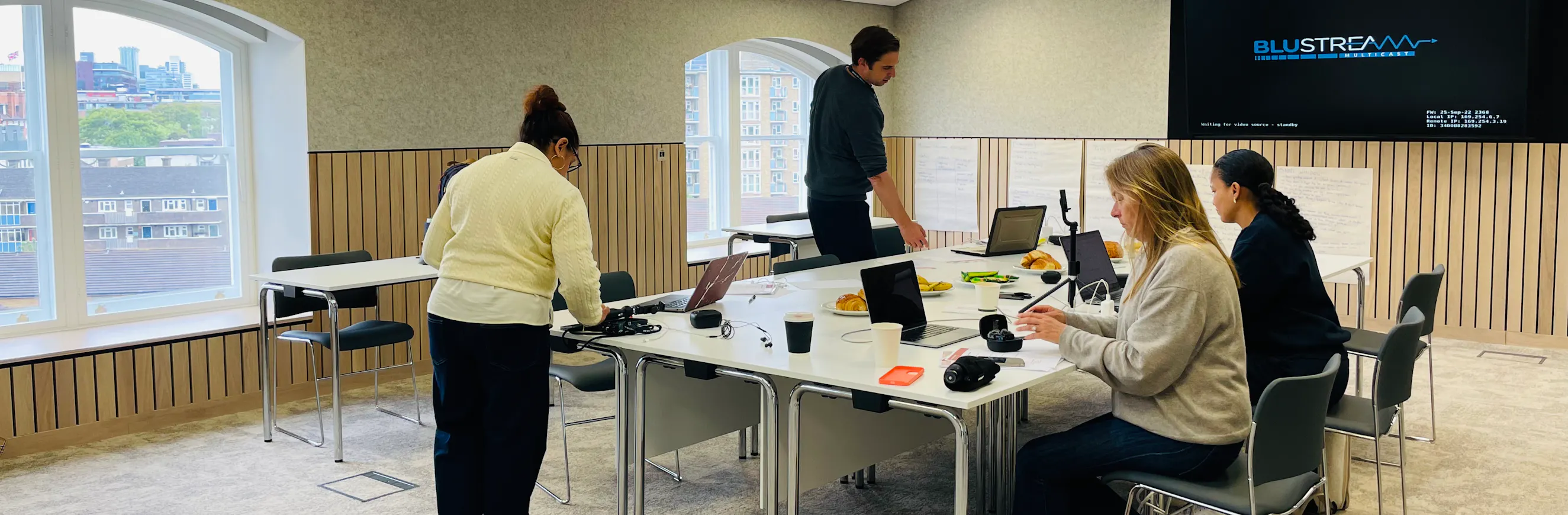
A workshop with the IndustriALL comms team.
We’ve all participated in a version of a training workshop where you sit in a room, watch some slides, nod a lot, feel energised for a hot minute and then go back to work and do everything exactly the same way you did it before.
This was not that workshop.
When the communications team at IndustriALL Global Union invited us in, the brief was initially very simple: help the team get better at video. We dug into what that actually meant for them and the real need turned out to be something more specific and way more interesting.
One person on the team – the video lead – was spending most of her time fixing things instead of making them. Footage would often arrive lacking context, and stories that had the potential to be strong would land missing the structure that turns a rough clip into a powerful message. She'd have to go back, dig out the story, and essentially rescue the piece from scratch. Good at it as she is (and trust us, she is), this wasn't a sustainable way to work. The team's video capacity was only ever as large as one person's bandwidth.
We turned this into the goal of the two days: teaching the team to capture better stories in video format, yes, but also shifting how the team works together. Moving the video lead from repair to review. Catchy, isn’t it?
Day 1: From broad to purposeful
We started the way we always start: by making something.
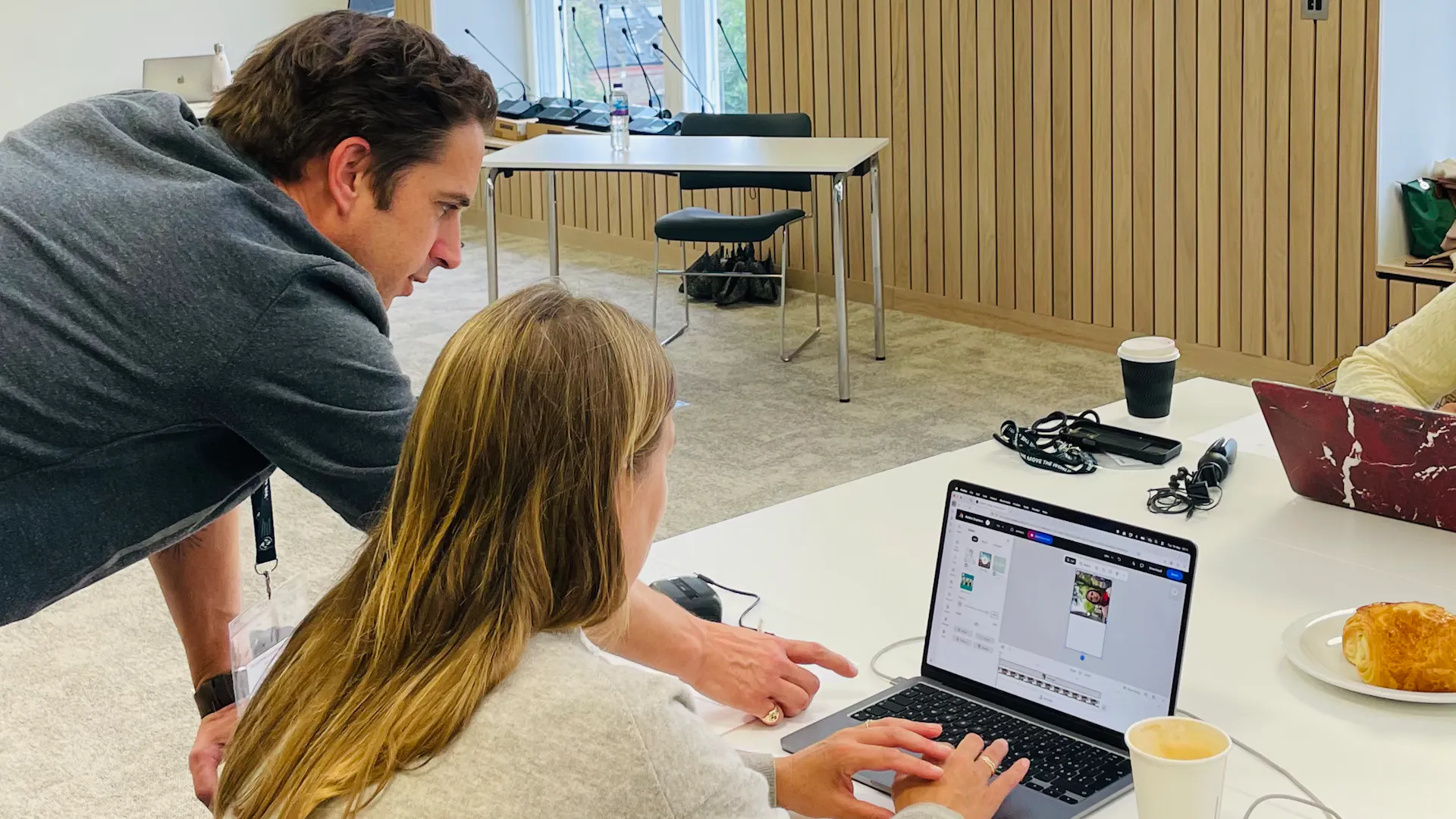
Before any theory, we asked the team to film each other on their phones. This was the brief: "Someone just walked into your office and said: do a video about training. You have one minute. Go."
We made this deliberately uncomfortable, to mirror what comms teams face constantly. We watched back what they made and asked them two questions: what would you have wanted to know before you pressed record, and what would you judge this by?
Out of those two questions, the team built the two tools that sat at the heart of the whole two days: a before-filming tool that turns a vague brief into a clear intention, and an after-filming standard that tells you whether a piece is ready to go.
Standards you've created always feel different from standards you've been handed.
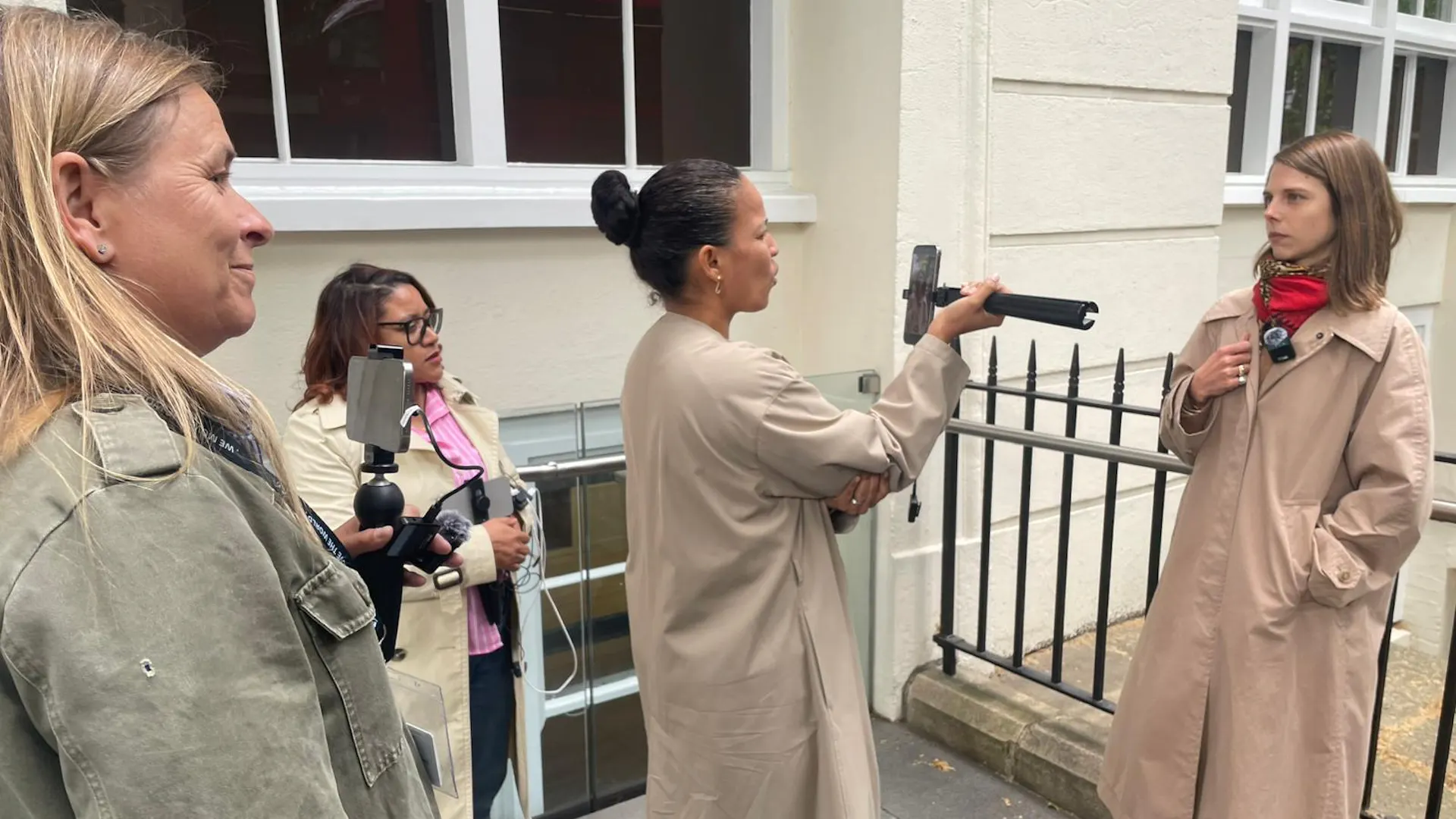
The afternoon took us outside in the London cold and rain, filming each other in real conditions with real time pressure to learn and anchor the capture habits that make footage usable. Then back inside to back everything up and fill out the Capture Note.
Now the Capture Note deserves a moment of its own. It's the handover document that means whoever picks up the footage next doesn't have to rediscover the story from scratch. Who was filmed, what the context was, what the intended story is, what's strong in the material and what's missing is written up at the moment of capture, while it's all still fresh. The edit becomes faster and sharper as the editor's time goes into improving the work rather than reconstructing it. When the IndustriALL team identified the single resource that had shifted their way of working, they unanimously agreed that this was it.
We built IndustriALL's Capture Note as a Google Form so it can be filled in anywhere, anytime, including on a phone directly after filming. Every completed form creates a new entry in a shared spreadsheet which becomes a searchable archive that grows every time the team does a shoot.
Day 2: From footage to finish
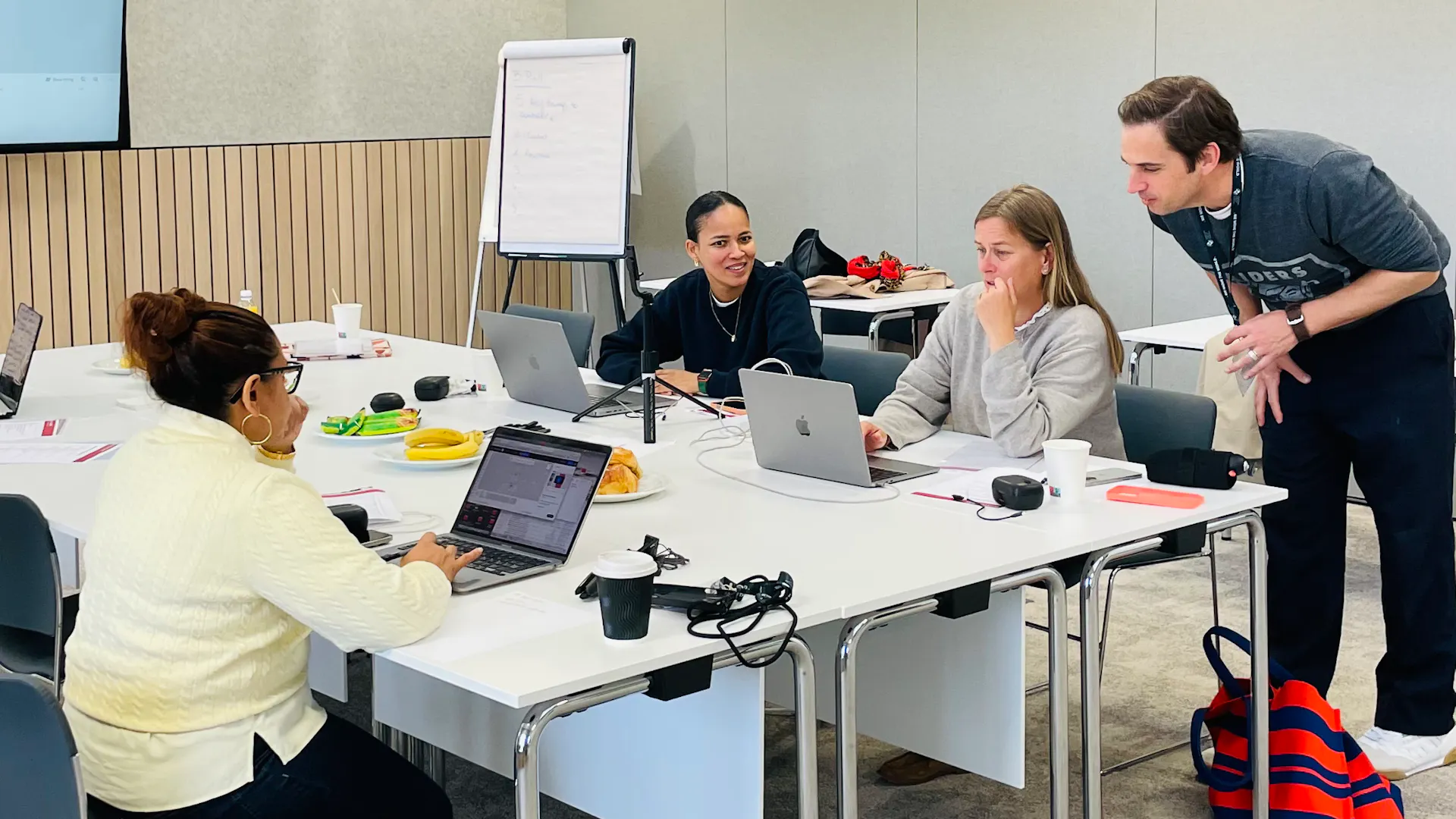
Day 2 was editing. The team packaged short videos from the material they'd shot the day before using the story structure that sits at the core of our methodology to turn a soundbite into something with a beginning, a middle and a clear ask.
At the end of the two days, we came back to the workshop's original goal: the video lead reviewing and improving, rather than rescuing. And then we built, piece by piece, the Team Working Agreement that would make that true. Who captures, who fills in the Capture Note, what has to accompany footage before it reaches the video lead, what the review process looks like, what counts as done and whether consent has been properly obtained from everyone in the footage.
We know firsthand that when a team has an explicit, shared agreement about how they work together, the whole machine runs differently.
Petra Brännmark / Communications Director
"Fat Rat Films delivered a great training, tailored to perfection and infused with creativity, professionalism and a lot of inspiration. We left with shared standards, a system that actually holds and, most importantly, a new way of working together that we built ourselves."
IndustriALL represents 50 million workers across 130 countries. The stories that exist within such an organisation, of international solidarity campaigns, or workers' rights victories on the ground have the power to move people. The goal of the two days was to make sure more of those stories get told and told well.
We delivered this workshop at ITF House, the headquarters of the International Transport Workers' Federation, an organisation Sarah once worked for as Comms Manager. Some rooms just feel like home.
What the workshop leaves you with
Each workshop is built around the team's actual work, tools, platforms and the stories they need to tell. By the end of two days, teams leave with:
- A shared standard for what "good" looks like agreed by the team
- The capture habits that mean strong stories make it from the field to the feed
- The interview skills to find the human story inside the institutional message
- Hands-on skills in Adobe Express learned through their own material and built around the format they'll actually use
- A Credibility standard on what "safe to publish" means, covering contributor consent and accuracy
- A system built around the Capture Note, which grows a searchable story archive every time the team does a shoot
- A Team Working Agreement: who does what, what handover looks like, and how to review without creating a bottleneck
The workshop is built around your team, your tools and the stories that matter to help you develop the habits to keep telling them.
If your team is sitting on good stories but not quite sure how to capture and share them consistently, come find us.