Data + Empathy: A Story (With a Happy Ending)
April 2026
Once upon a time, there was an organisation that did great work and had hard and demonstrable evidence. They wanted everyone across the lands to understand the scale of what they were responding to, to believe that the problem was real and their solution worked. They issued decree after decree and circulated them all throughout the kingdom. Sadly, their messages were forgotten the next day, buried under seventeen other decrees, two royal proclamations and a town crier nobody listened to. The work was good and the evidence was solid, but the story was missing. Information, it turns out, has never been the thing that moves people on its own... Stories have.
This tale doesn't end there though, because once they found the story – the right story, told in the right way and to the right people – the evidence finally landed. The kingdom, as it happens, did change for the better.
But we're getting ahead of ourselves!
Stories are how we make sense of the world
Human beings have been telling stories around fires for thousands of years. Long before we had briefing papers, impact reports or LinkedIn carousels, we had stories. It was the tool we used to make sense of the world, to warn each other, to pass on what we knew and to imagine what didn't yet exist.
That instinct hasn't gone anywhere. Think about any conversation where you're trying to close a gap in understanding. Your instinct, almost always, is to say: "let me give you an example", not "let me give you a statistic". Stories give us the ability to visualise what we haven't experienced, to step inside someone else's reality and feel what it's like to be there.
And the capacity to make something distant feel close is exactly what makes a story so powerful as a strategic tool. It is the bridge between "you" and "me." It's how we build understanding across divides, imagine a world beyond the one immediately around us and feel connected to people whose lives look entirely different from our own.
Why empathy alone isn't enough
Enter the dragon: when a story operates alone and is untethered from evidence, it can be dismissed. One person's experience can be affecting, yes. But is it representative? Is it a pattern? Is it systemic? These are the questions that matter to us in the impact sector kingdom.
Dragon number 2 is that in a world of accelerating disinformation, a story without evidence doesn't just risk being dismissed, it risks being indistinguishable from the noise.
The narratives competing with ours in the social impact space are often louder, better-funded, and algorithmically turbo-charged BUT they’re not rooted in evidence. Quite the opposite actually, they're built on fear, simplification and manufactured outrage. They spread because they feel true, not because they are.
This is precisely where data becomes essential. Empirical evidence is what separates a story grounded in reality from one engineered to manipulate. It's what protects the communities whose experiences we're telling from having their stories waved away as anecdotes.


So why does data alone still fall flat?
Because knowing something is true and feeling its importance are two entirely different experiences.
Even the kingdom's scholars agree and we offer this evidence in the spirit of practising what we preach. As a recent study published in the Quarterly Journal of Economics puts it: "Narratives are powerful not just because they persuade in the moment, but because they are remembered better, come to mind more easily later, and therefore shape future beliefs and decisions more durably than raw statistics."
When the statistic gives a story scale, the story gives the statistic a reason to matter and together, they overcome all the dragons and restore peace in the kingdom.
Now, knowing this is one thing and using it well is the part of the quest that requires a map.
The ratio depends on what we need to achieve
There is no single correct Data + Empathy ratio. The balance shifts depending on what we need to achieve and who we need to speak to.
Story leads when the goal is to shift perception, build empathy across a divide, or change a cultural norm – any medium where attention needs to be earned before the argument is made.
Data leads when the audience is already persuaded of the importance of the issue, possibly already invested, and needs proof of impact to continue that investment. Or when the goal is to make a case to a technically literate or policy-oriented audience and credibility is the primary currency in the room.
Both need to be doing equal work when the audience is mixed – a funder who needs the business case and the human context, a campaign that spans multiple formats and audiences, or whenever the goal is durable belief change rather than a moment of feeling.
Audience first, always
None of this works if we skip the most important step: knowing who we're talking to.
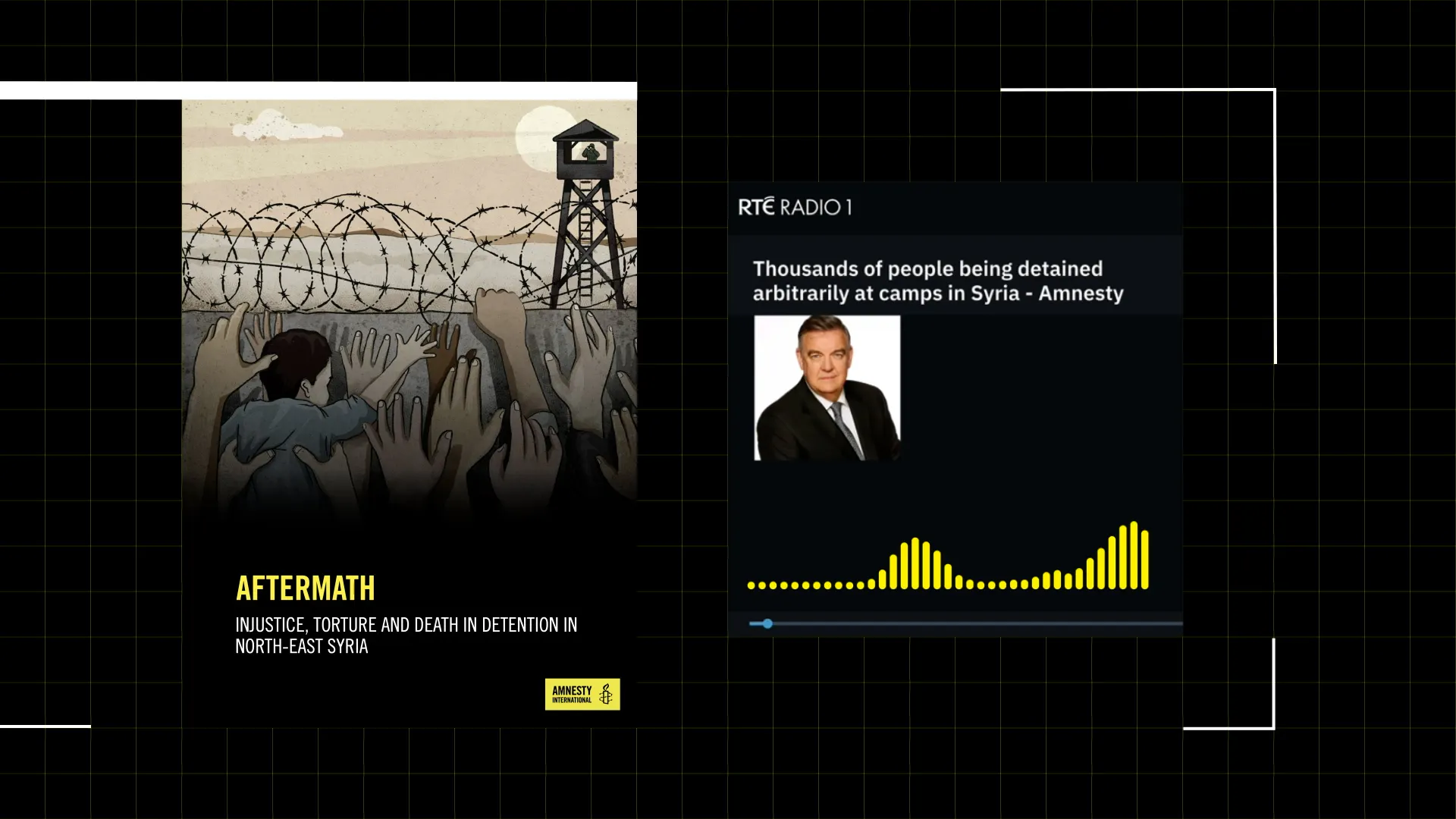
At Fat Rat Films, we use our AAA Framework – Affected, Allies, Actors of Change – to map the audiences in any given campaign. Each group sits in a different relationship to the issue, carries different prior knowledge and needs something different from the communication. A film that moves a grassroots activist network might not be exactly what’s needed in a room of government officials and vice versa.
This is also an ethics question. The way we balance data and empathy has real implications for the people whose stories are in our work. Leading with raw statistics about a marginalised group before a story has established their humanity and agency can dehumanise even when the intent is advocacy. The order matters, so do the ratio and the framing.
We always ask: who is in the audience, what do they already know, and what do they need to feel or understand next?
The organisations getting this right aren't choosing between head and heart. They're being intentional about sequence, ratio and audience, and building communication that is both rigorous enough to be trusted and human enough to be remembered.
The organisation in our story figured that out. Their evidence found its story, their messages were remembered and the kingdom changed for the better.
And Data and Empathy? They lived happily ever after.
The end.